PORSCHE 93010734811 Pressure Fed Tensioner Oil Line Right
fits model: 911. make: Porsche.
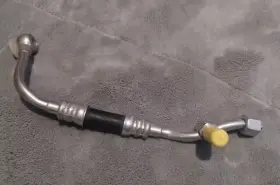
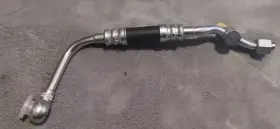
( Part Type: Pressure Oil Line ), ( Manufacturer Part Number: 93010734811 ), ( Country/region Of Manufacture: Germany )
Review PORSCHE New Genuine Oem 930 Pressure Fed Tensioner Oil Line Right fits 911
The Porsche 930 107 348 11 is an essential component in the oil cooling system of the iconic Porsche 911 (930) models, specifically those produced between 1978 and 1989. This part is a pressure-fed tensioner oil line and plays a crucial role in ensuring the efficient and continuous circulation of engine oil within the cooling system, consequently maintaining the temperature stability and longevity of these high-performance engines.
The tensioner oil line is a tubular structure made primarily of rubber, engineered to absorb the vibrations generated by the engine's operation. It connects the oil cooler and tensioner pulley, drawing oil under pressure from the engine's oil sump and distributing it to the oil cooler. At the same time, this component effectively reduces the amount of stress experienced by the cooler and other vulnerable engine components, as well as preventing any unwanted oil leaks.
This specific part, Porsche 930 107 348 11, has been engineered with meticulous precision by Porsche, taking into account the unique demands and requirements of their 911 (930) engines. It undergoes rigorous testing to ensure a perfect fit and compatibility with genuine Porsche systems, giving its users peace of mind, knowing they're investing in a genuine, high-quality part.
The Porsche 930 107 348 11 tensioner oil line boasts a number of unique features. Its durable design incorporates reinforcement strips along the length of the line, which strengthen its resistance to wear and tear while ensuring excellent flexibility. This construction assures optimal performance throughout the lifespan of the part, even under the extreme conditions that these high-performance engines are often subjected to.
Older Porsche 911 (930) models may develop issues with aging oil lines, leading to potential coolant leaks or engine overheating. Installing a new Porsche-original tensioner oil line, such as the 930 107 348 11, will help prevent these problems, ensuring your treasured classic Porsche 911 (930) continues to provide an enjoyable and reliable driving experience. Proper installation, following the guidelines provided by Porsche, is essential to reap the full benefits of this top-quality component. Trusting the experts at your local Porsche dealership, or a reputable independent workshop experienced with Porsche systems, is advisable for a professional and successful installation.
In conclusion, the Porsche 930 107 348 11 is an integral part of your Porsche 911 (930) engine cooling system, and a crucial element in maintaining its mechanical integrity, longevity, and performance. This genuine Porsche tensioner oil line is designed with the highest standards of engineering and manufacturing tailored specifically to these iconic performance cars. By addressing the need for replacement or maintenance, you not only guarantee optimal cooling system efficiency but also invest in the continued success of your Porsche 911 (930) ownership experience.
Pros of Buying a Porsche 911 930 Pressure Fed Tensioner Oil Line:1. Improved Engine Performance: A new Porsche 911 930 pressure fed tensioner oil line may help improve the engine performance by ensuring proper lubrication and tension of the engine belts. This can lead to increased power output and better fuel efficiency.
2. Reliability: If you own an older Porsche 911 model with high mileage, a new tensioner oil line could provide peace of mind by reducing the risk of belt slippage and related engine damage.
3. Preventive Maintenance: Regularly replacing the tensioner oil line is a crucial aspect of proper Porsche 911 maintenance. Investing in a new pressure fed tensioner oil line can help prevent potential issues and extend the life of your engine.
4. Enhanced Drivability: Replacing the tensioner oil line may lead to a smoother and more responsive driving experience due to better engine belt tensioning and lubrication.
5. Authenticity and Originality: A new, authentic Porsche 911 930 pressure fed tensioner oil line ensures that your car's maintenance history remains genuine, maintaining or even increasing its resale value.
Cons of Buying a Porsche 911 930 Pressure Fed Tensioner Oil Line:1. Cost: The cost of a new Porsche 911 930 pressure fed tensioner oil line may be significant, as genuine Porsche parts can be expensive.
2. Labor Cost: If you choose to have the tensioner oil line replaced by a professional mechanic, the labor costs can add to the overall expense.
3. Potential Aftermarket Alternatives: While some argue that genuine Porsche parts provide the best results, aftermarket tensioner oil lines can be a more budget-friendly alternative. However, this may also result in potential compatibility issues or lower overall quality.
4. Inconvenience: Replacing the tensioner oil line in a Porsche 911 can be a time-consuming task, especially if you choose to do it yourself. This may require a considerable investment of time and effort.
Conclusion:In conclusion, investing in a new Porsche 911 930 pressure fed tensioner oil line can lead to improved engine performance, reliability, preventative maintenance, enhanced drivability, and ensure authenticity for your vehicle. However, the high cost and potential labor expenses may deter some buyers. Ultimately, considering the age and condition of your Porsche 911, as well as your personal maintenance and budget priorities, will help determine if a new tensioner oil line is a worthwhile investment.
Recommendation:If you own a high-mileage Porsche 911 with potential engine belt tensioning issues or plan to keep the vehicle for an extended period, investing in a genuine Porsche 911 930 pressure fed tensioner oil line is a recommended preventive maintenance step that can potentially save you from costly engine repairs in the future. Consider factoring the cost into your long-term vehicle maintenance budget. Alternatively, if you have a lower budget, aftermarket tensioner oil lines may provide a more cost-effective option. Just be aware of the potential risks associated with aftermarket parts, such as compatibility issues or lower overall quality.
Details:
part #: 93010734811 prices
- $40.00-$65.00
specifications pumppruner:
- for models: 911
- for makes: Porsche
- part type: Pressure Oil Line
- manufacturer part number: 93010734811
- country/region of manufacture: Germany
shipping pumppruner:
- service: Standard
- type: Fixed
- cost: $0.00
- transit: 7-13 Days
- class: Standard
payments pumppruner:
- wallet: Google-pay
- credit card: Diners-club
- other
returns pumppruner:
- policy: No Returns
offer pumppruner:
- started: January 4, 2025
- availability: In Stock
- sold: 0
- options: Ship-to-home
- quantity: 1
general pumppruner:
- condition: New
- Car Truck Parts Accessories > Engines Engine Parts > Oil Pumps Parts
seller pumppruner:
- # reviews: 2644
- city: Anaheim, California
- rating: 99.2%
Porsche 93010734811 Is Similar To:
- Porsche 94810728511 2011-2018 Cayenne 4.8l Engine Oil Hose Tube (35.1% similar) Please here to view details 2011 -2018 porsche cayenne 4.8L - engine oil hose / tube: condition notes this part comes as shown in the picture. Part fitment and compatibility. Remember left means the drivers side of vehicle and right passengers in our listings...(June 7th, 2024)
- Genuine Porsche 9a1 105 235 02 2009-2016 Oil Pump Chain Tensioner 1 Year Warranty (40.5% similar) Porsche 2009 -2016 oil pump chain tensioner genuine 1 year warranty, part fits: tensioner, brand new part with full year warranty. We combine shipping. Part applications. All parts have 1 year warranty...(June 9th, 2024)
- Cohline 930 107 347 14 Porsche 911 Ft68-ft93 Left Oil Line To Camshaft Carrier Oem Warranty (31.5% similar) Porsche part # 930 107 347 14, made by Cline oem. Porsche 911 '68-'93 left oil line to camshaft carrier Cline oem warranty,: part fits: left carrier, brand new part with full 1 year warranty. Position qty: left use together with oil pipe # 930 107 347 09. Only for cars which...(June 13th, 2024)
- Porsche 99610700794 911 996 997 Turbo Gt2 Gt3 Oem Engine Oil Pump (38.2% similar) GSR veers 1652 gs 9.7.4 1652. We return this consideration with shipping as fast possible. It spins smoothly and quietly there is no damage to the unit or debris inside of it. Porsche 911 996/997 turbo GT2 GT3 oem engine oil pump: pump, part number, 996 107 007 94, manufacturer: porsche...(June 13th, 2024)
- Porsche 99610702155 97-08 Boxster S Engine Motor Oil Scavenger Secondary Suction Pump Oem (36.4% similar) The item was tested prior to removal and is currently in good working condition. Just didn't like it. 2003 porsche boasters engine motor oil scavenger secondary suction pump, part found a better price. It does have signs of normal wear...(June 15th, 2024)
- Porsche 94810703206 Engine Oil Pump From 2006 Cayenne 4.5 Awd (33.8% similar) Cayenne 03 4.5L vain b, 5TH digit. Cayenne 05-06 4.5L, w/o turbo; vain b, 5TH digit. Please replace such items as required for proper installation. Cayenne 04 4.5L, 4.5L vain b, 5TH digit...(June 18th, 2024)
- Porsche 948107032 Engine Oil Pickup Tube From 2006 Cayenne 4.5 Awd (34% similar) Cayenne 03 4.5L vain b, 5TH digit. Cayenne 04 4.5L, 4.5L vain b, 5TH digit. Cayenne 05-06 4.5L, w/o turbo; vain b, 5TH digit. Please replace such items as required for proper installation...(June 19th, 2024)
- Porsche 95810701310 08-18 Cayenne 958 Touareg Vr6 3.6l Engine Motor Oil Pump Oem (36.7% similar) Please, do not purchase parts just to check and diagnose your vehicles problem. Item may show light scuffs, scratches or other imperfections as a result of this being used part. Large items include: hood, door shell, fender, engine, transmission, trunk hatch, windshield, bumper, reinforcement...(June 20th, 2024)
- Porsche 99610707557 1997-2004 Boxster Engine Oil Pump Pick Up Tube Oem 97-04 (34.4% similar) Mileage: 80662. Exterior color:silver. Fitment type: direct replacement. Stock: 160649. Model: boaster. This part was removed off a 2000 porsche boaster manual transmission with 80,662 miles. This part is in good working condition, and may have some minor wear or scratches visible from...(June 21st, 2024)
- Porsche 948107013 2011 Panamera Oem Oil Pump With Hardware Awd 4.8l (37.7% similar) 2011 porsche Panama oem oil pump with hardware AWD 4.8L 948107013: some vehicles have different specs that must be matched to ensure fit. Not just our heritage, but legacy 2011 porsche Panama oem oil pump with hardware AWD 4.8L 948107013...(June 27th, 2024)
- Porsche 948107010 2003 2004 2005 Fits Cayenne 955 4.5l M48 V8 Engine Motor Oil Fluid Pump (35.2% similar) All electronics items may need to be reprogrammed function, an electronic item not function without the proper programming. 2003 2004 2005 fits porsche cayenne 955 4.5L M48 v8 engine motor oil fluid pump. Location box A196...(June 28th, 2024)

5 offers $40.00–$65.00 USD
- Used. Offer #1 priced at $40.00 + $8.95 delivery = $48.95* total. Here is a nice used original Porsche right side oil line as used on 1983-89 911/930 models with pressure fed timing chain tensioners.+$8.95 shipping
- New. Offer #2 priced at $65.00 + $8.95 delivery = $73.95* total. +$8.95 shipping
- New. Offer #3 priced at $65.00 + $8.95 delivery = $73.95* total. +$8.95 shipping
- New. Offer #4 priced at $65.00 + $8.95 delivery = $73.95* total. +$8.95 shipping
- New. Offer #5 priced at $55.46 + $0.00 delivery = $55.46* total. All parts are priced individually unless identified as a set or kit. P/N: 93010734807 Cohline.FREE SHIPPING